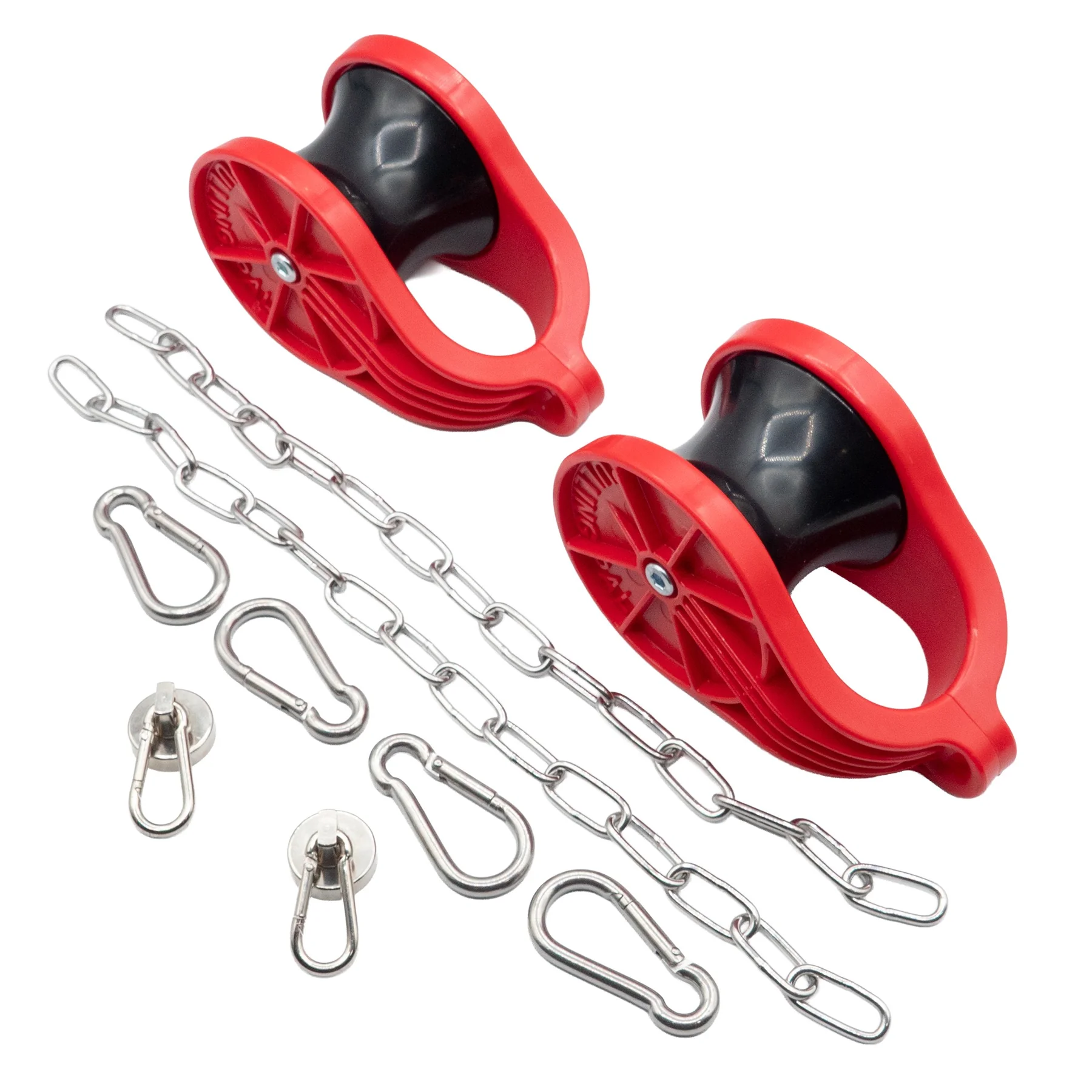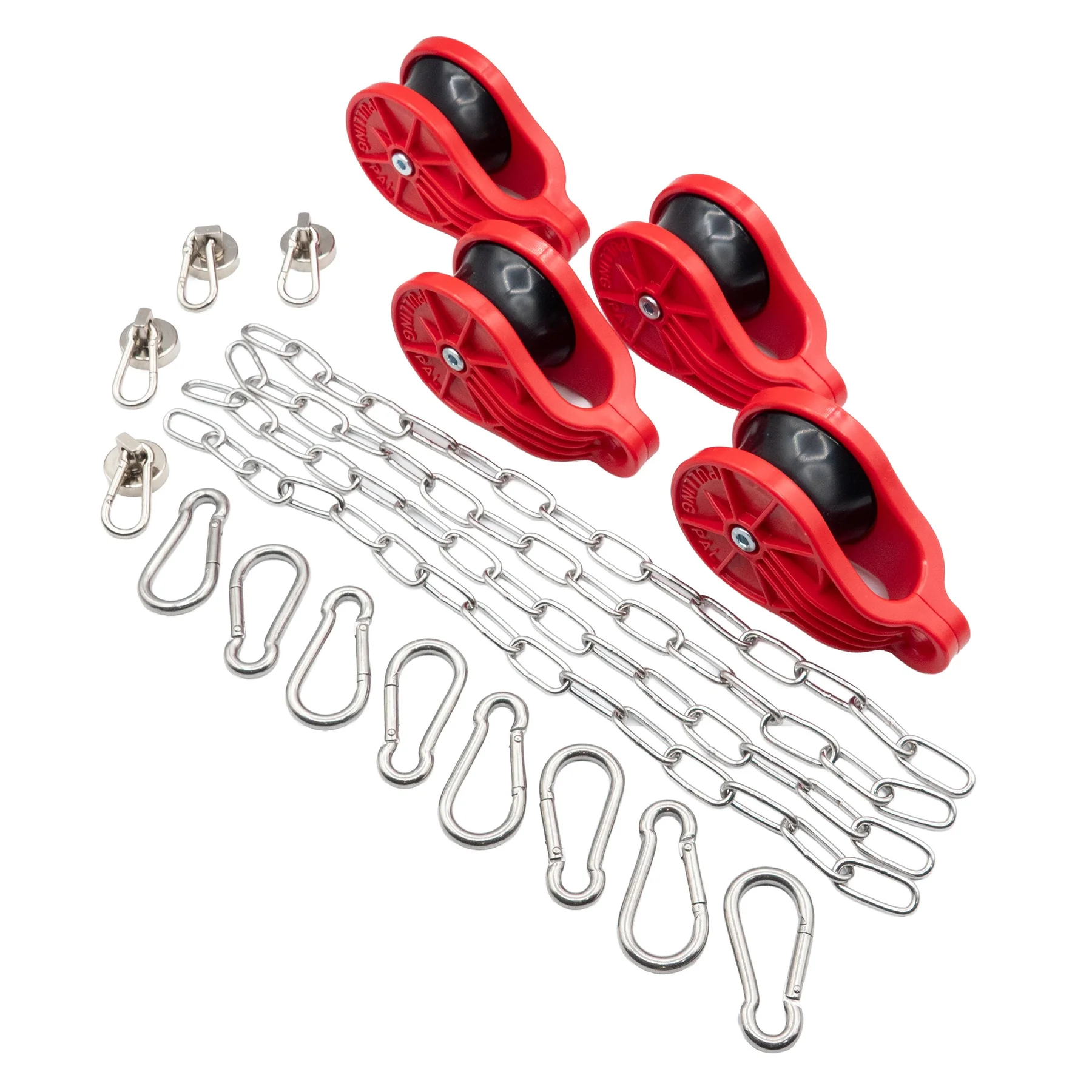
4-Pack · 1-inch sheave opening
PP10 V2
The compact V2 pulley with a 1-inch sheave opening for tight turns and smaller cable bundles. Load or remove cable midspan — no threading an end through.
I invented Pulling Pal in 2018. Others copied my earlier designs. I kept improving the original. Meet Pulling Pal V2.
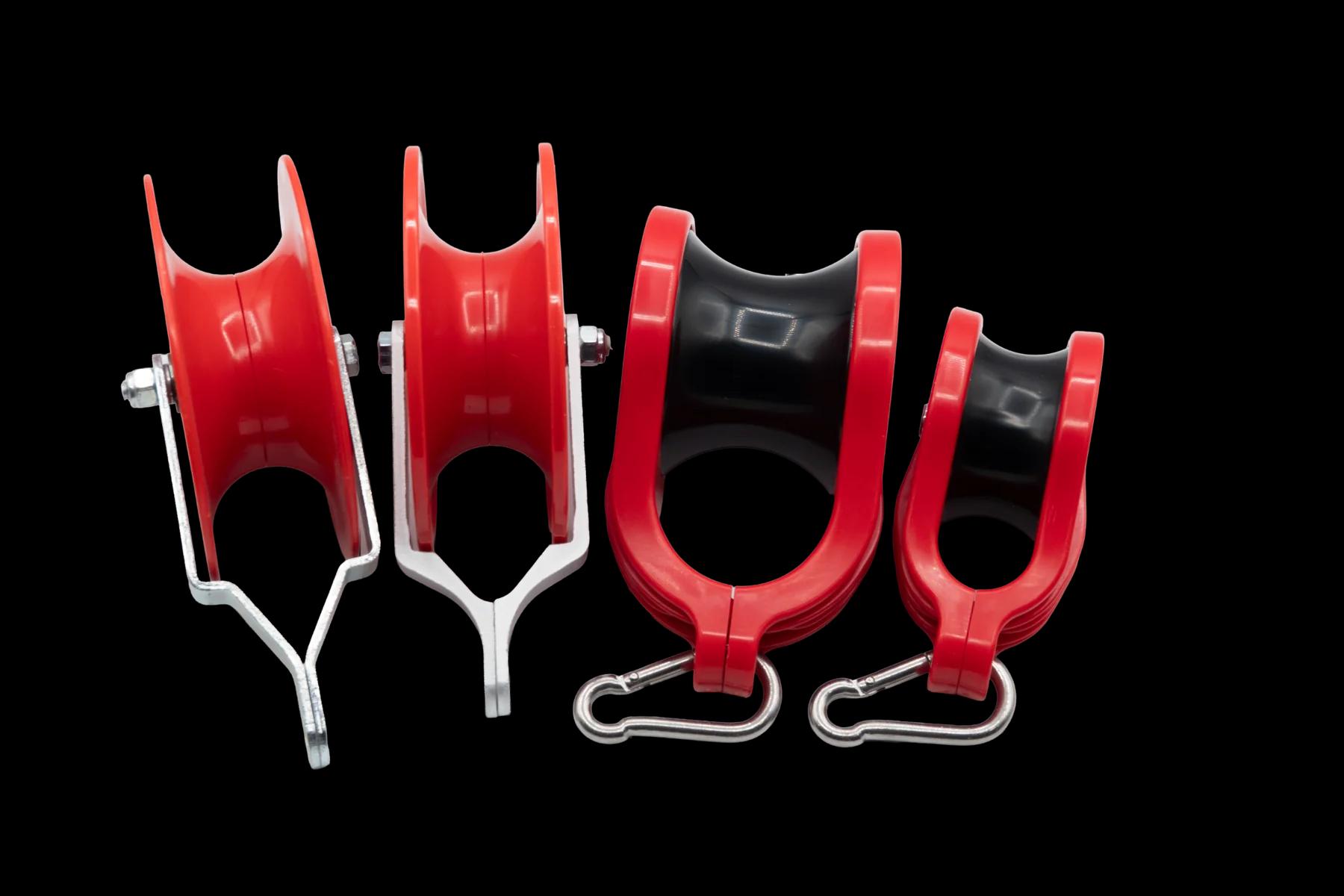
A 1-inch or 2-inch sheave opening. One fully shrouded V2 design with midspan cable loading. Every pulley includes a chain, two spring clips and a retainer magnet.
The compact V2 pulley with a 1-inch sheave opening for tight turns and smaller cable bundles. Load or remove cable midspan — no threading an end through.
A 2-inch sheave opening for larger cable bundles, with the same approximate sheave radius as the PP10. Load or remove cable midspan — no threading an end through.
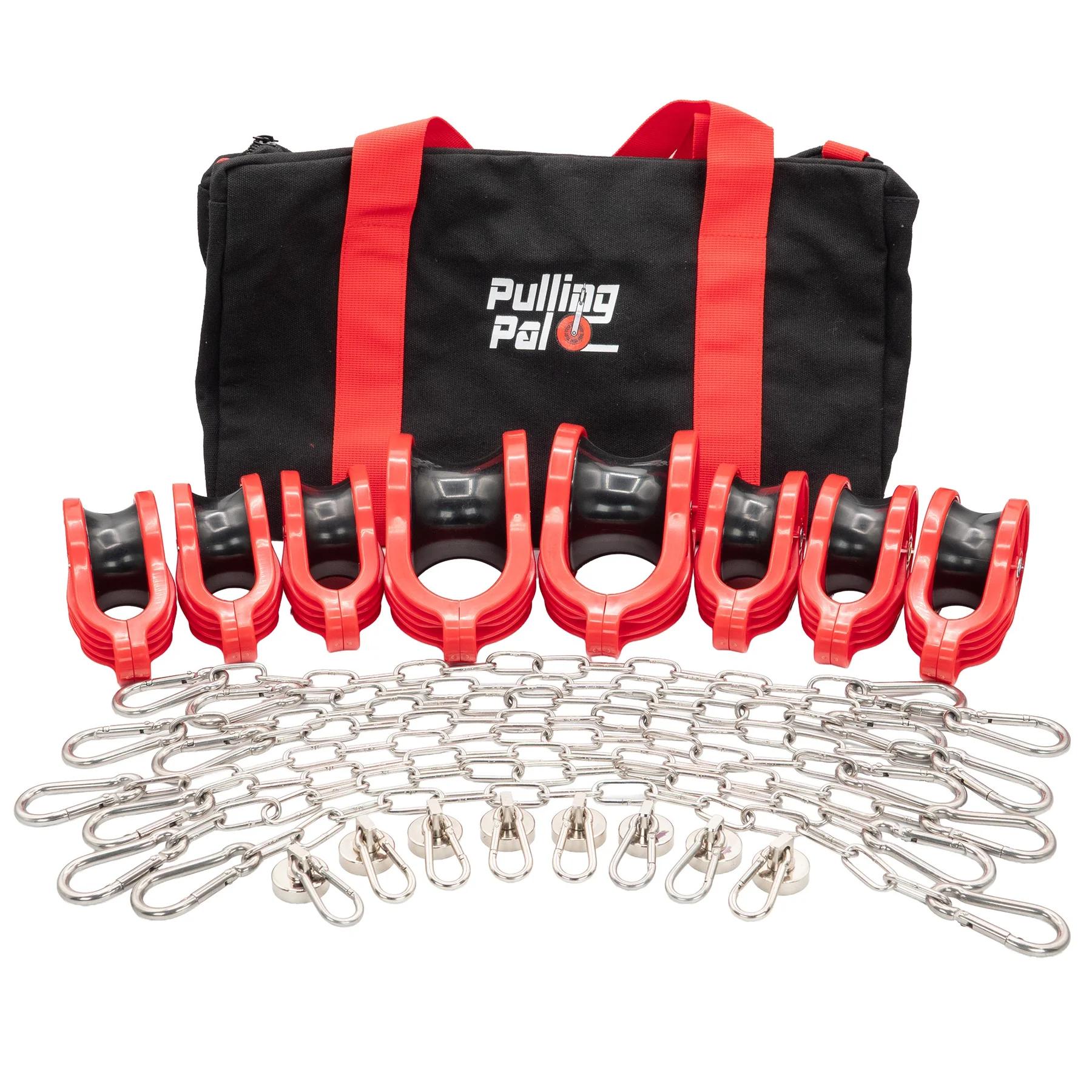
Six PP10s and two PP20s — both with midspan cable loading — plus every chain, clip and magnet, packed in a branded carrying bag.
When a horizontal cable pull stops, a pulley can droop. As tension returns, cable or pulling string may ride toward the sheave’s side gap — where older open-bracket designs can snag or jam.
V2 surrounds the rotating sheave with its housing, removing that exposed side-entry path. The housing can also rest against framing without the wheel rubbing on it.
See the three generations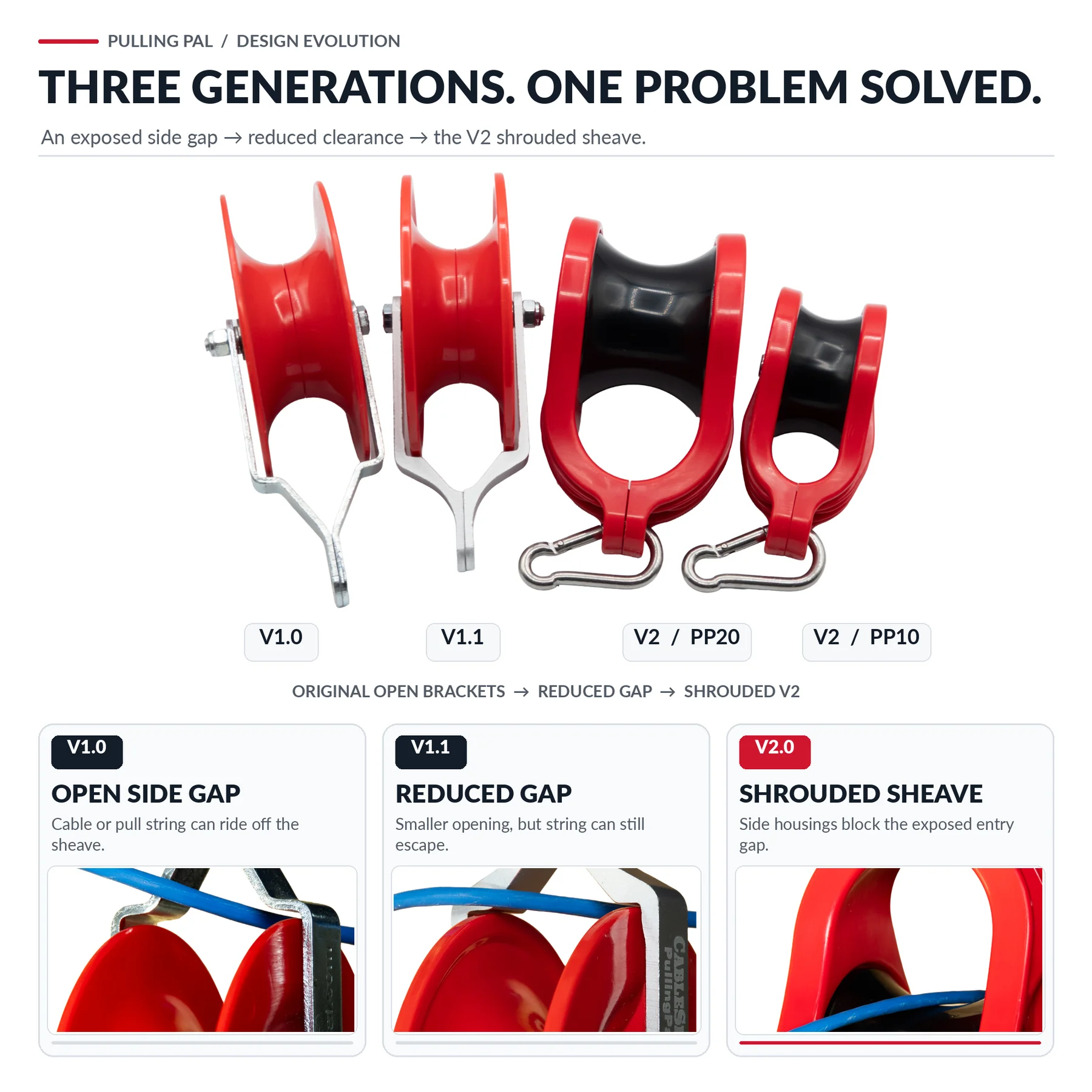
Load cable midspan — no threading an end through. The chain carries the load: on wood it is secured with the cinch clip; on steel the retainer magnet holds the chain in position when tension is released.
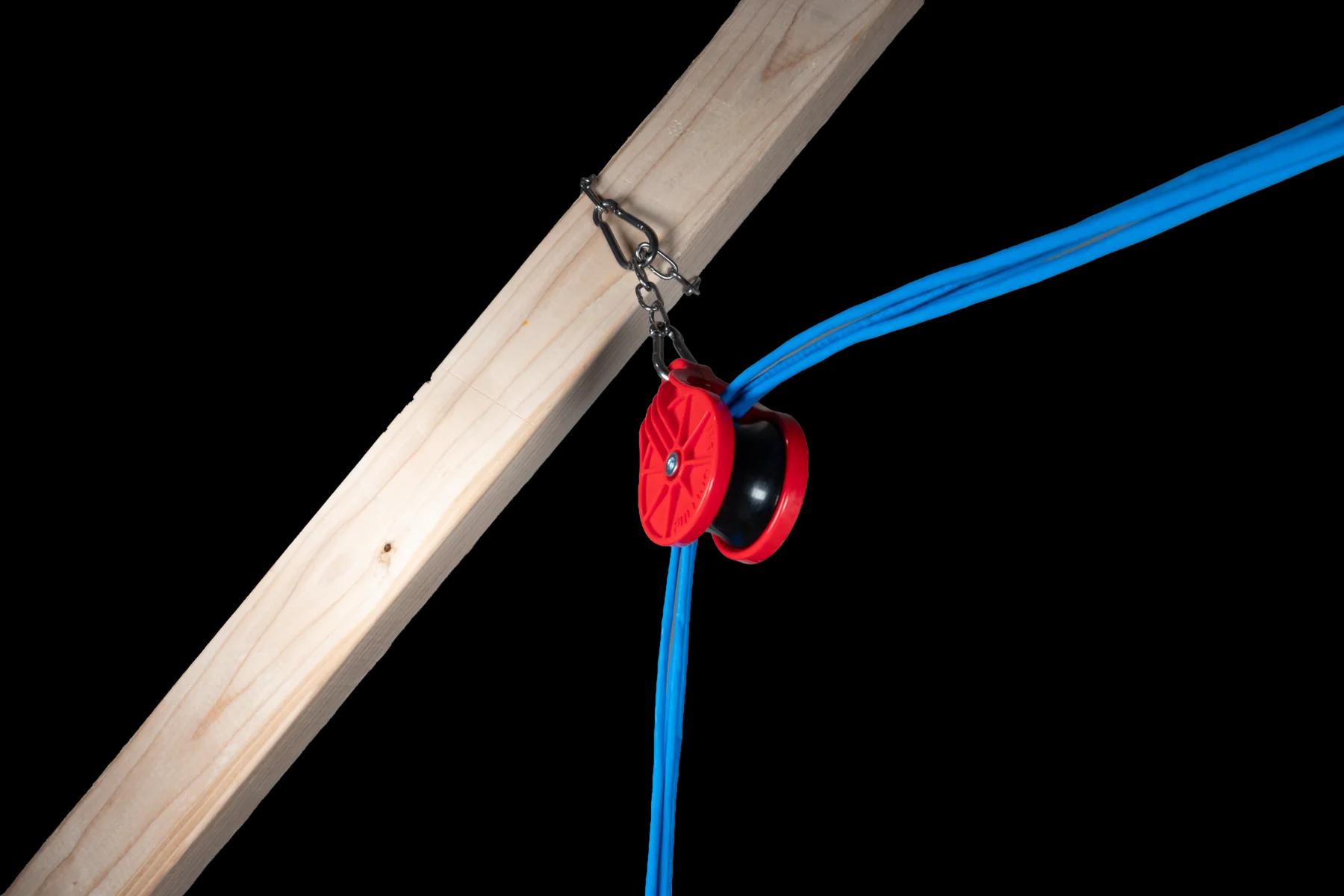
Wrap the chain around the framing and secure it with the cinch clip. No magnet is used on wood.
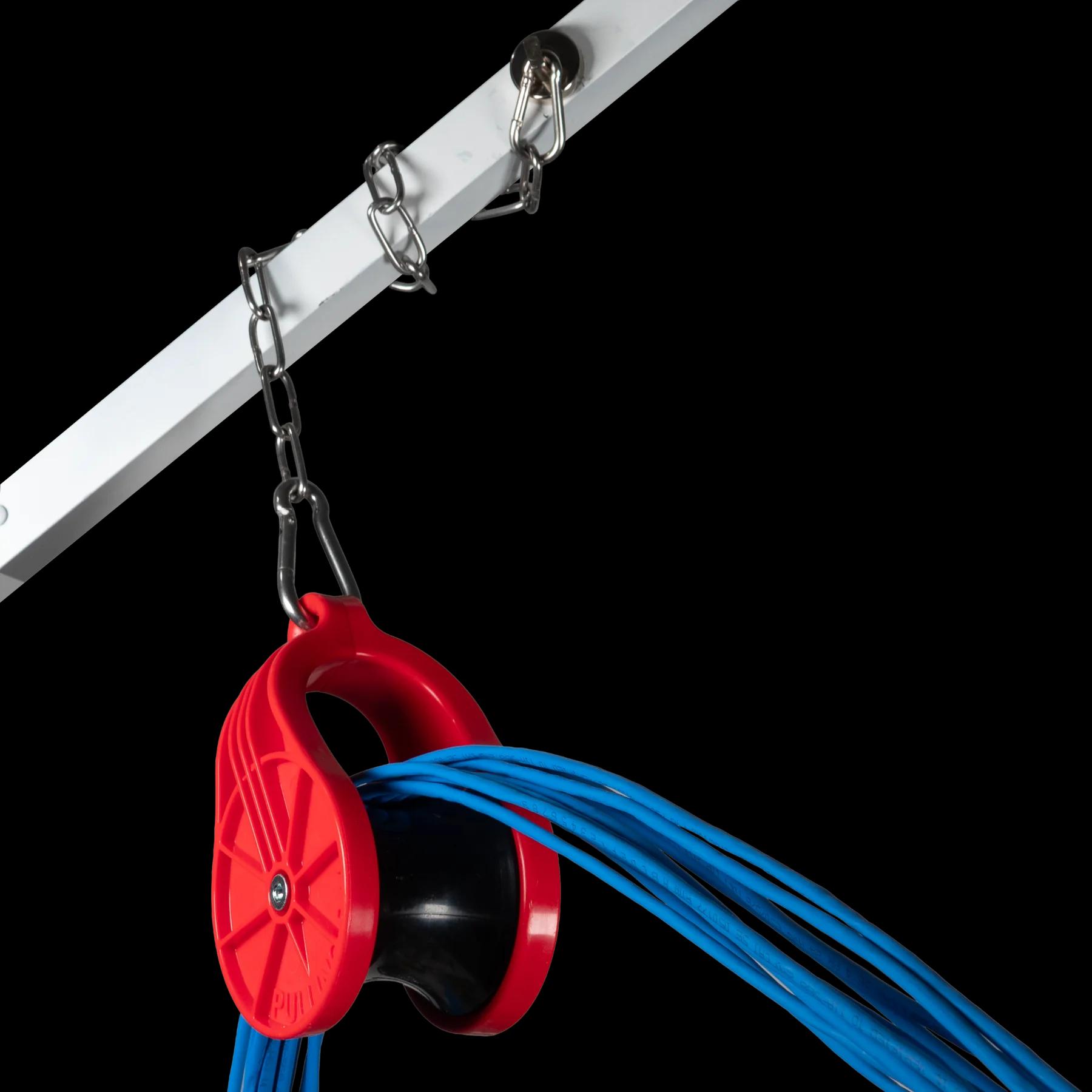
The chain carries the load. The retainer magnet holds the chain in position when tension is released.
I built the first Pulling Pal in 2018 to solve problems I ran into on real cable pulls. Since then, my earlier designs have been copied. I didn’t stand still — I kept reengineering the original.
I introduced the first Pulling Pal: a red sheave on a steel bracket. It worked — but on a restart, cable or pull string could ride off the sheave into the open side gap.
I moved to an extruded aluminum bracket that narrowed the gap. Better — but pulling string could still slip through and jam.
Versions based on my earlier designs showed up on the market. Meanwhile, the original kept evolving.
V2 surrounds the rotating sheave with its housing, closing the exposed side-entry path — while keeping midspan cable loading. Patent Pending. Assembled in Colorado, USA.
Choose by the sheave opening, not a cable count. PP10 V2 has a 1-inch sheave opening (1.00 × 1.25 in) for tight turns and smaller bundles. PP20 V2 has a 2-inch sheave opening (2.00 × 2.00 in) for larger bundles. Both share approximately the same sheave radius; the PP20 simply has a wider opening.
No. Both PP10 V2 and PP20 V2 support midspan cable loading: load or remove cables at any point along the run without threading an end through the pulley.
The chain carries the load. Each pulley comes with two spring clips: an attachment clip and a cinch clip. On wood, the chain wraps the framing and is secured with the cinch clip — no magnet is used. On steel, the chain carries the load and the retainer magnet holds the chain in position when tension is released.
Every Original Pulling Pal V2 is Designed & Tested for 300 LB Loads.
Pulling Pal V2 is assembled in Colorado, USA. The design is patent pending.
Pulling Pal V2 kits are sold through Amazon under the CableSlinger brand. Purchase links appear on this site when the V2 listings are live.