Three generations.
One problem solved.
The design evolved from an open bracket to a fully shrouded sheave — driven by real cable-pulling experience, not a styling refresh.
The three generations
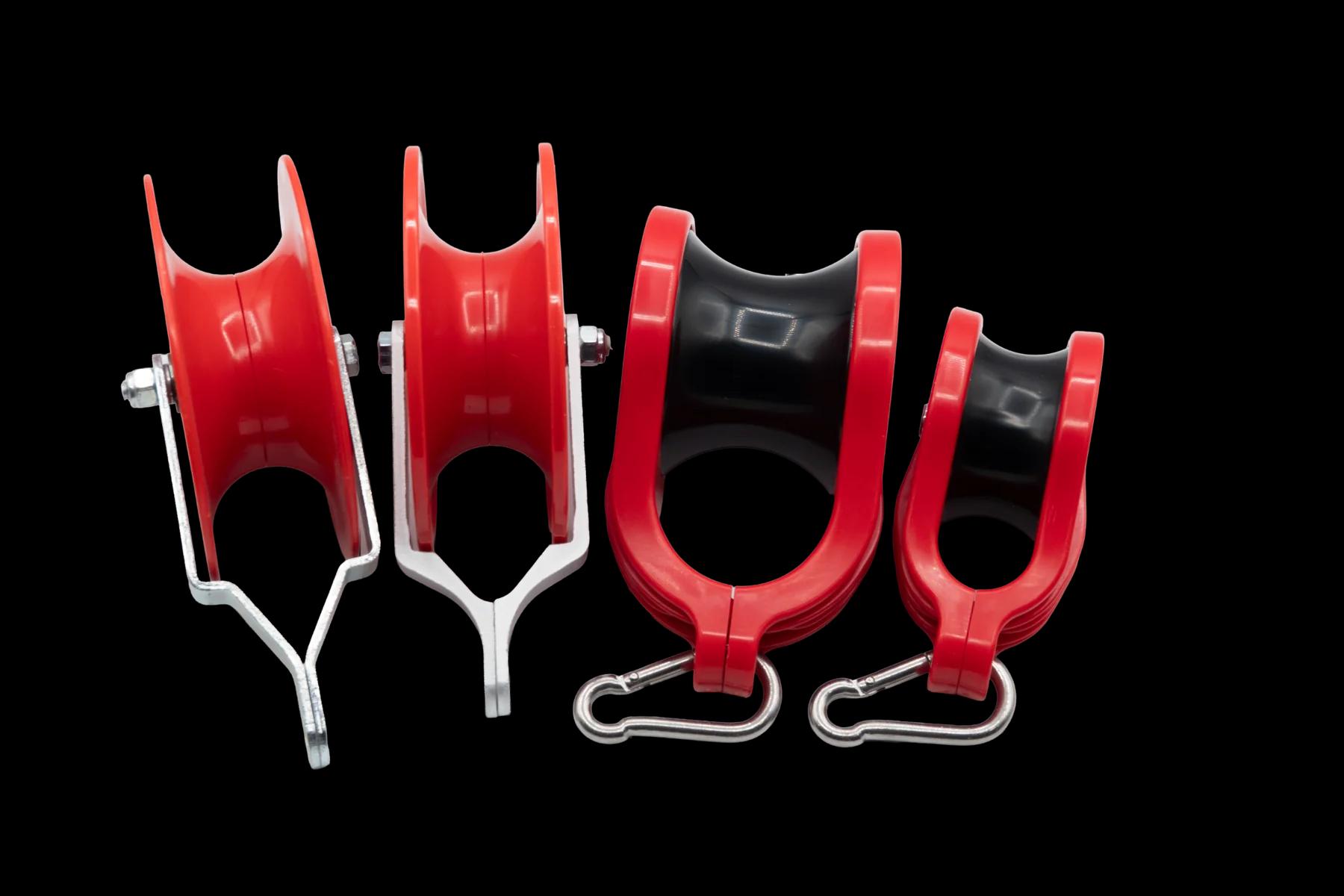
- V1.0
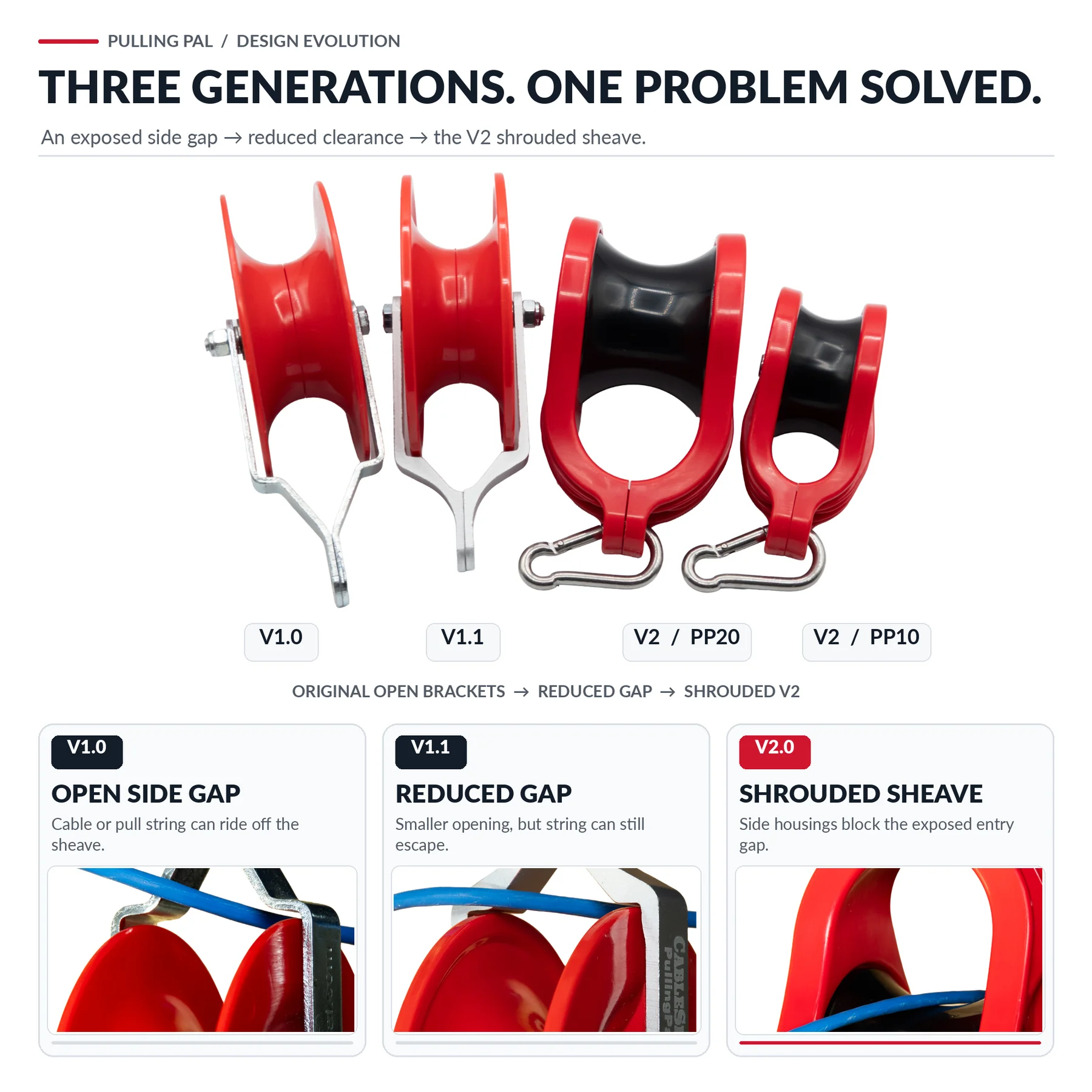
Open side gap
The original steel bracket. Cable or pulling string could ride off the sheave into the open gap between wheel and bracket.
- V1.1
Reduced gap
An extruded aluminum bracket narrowed the gap — but pulling string could still slip through and jam.
- V2
Shrouded sheave
Side housings surround the rotating sheave, removing the exposed side-entry path altogether — while cables still load and unload midspan, with no end threading.
The cable can move before the pulley realigns.
During a horizontal turn, a pulley can droop when tension is released. When pulling resumes, cable or string may first ride up against the side of the wheel. In an open design, that is an opportunity to enter the bracket gap and become trapped.
V2 surrounds the wheel with its housing to close that failure path.
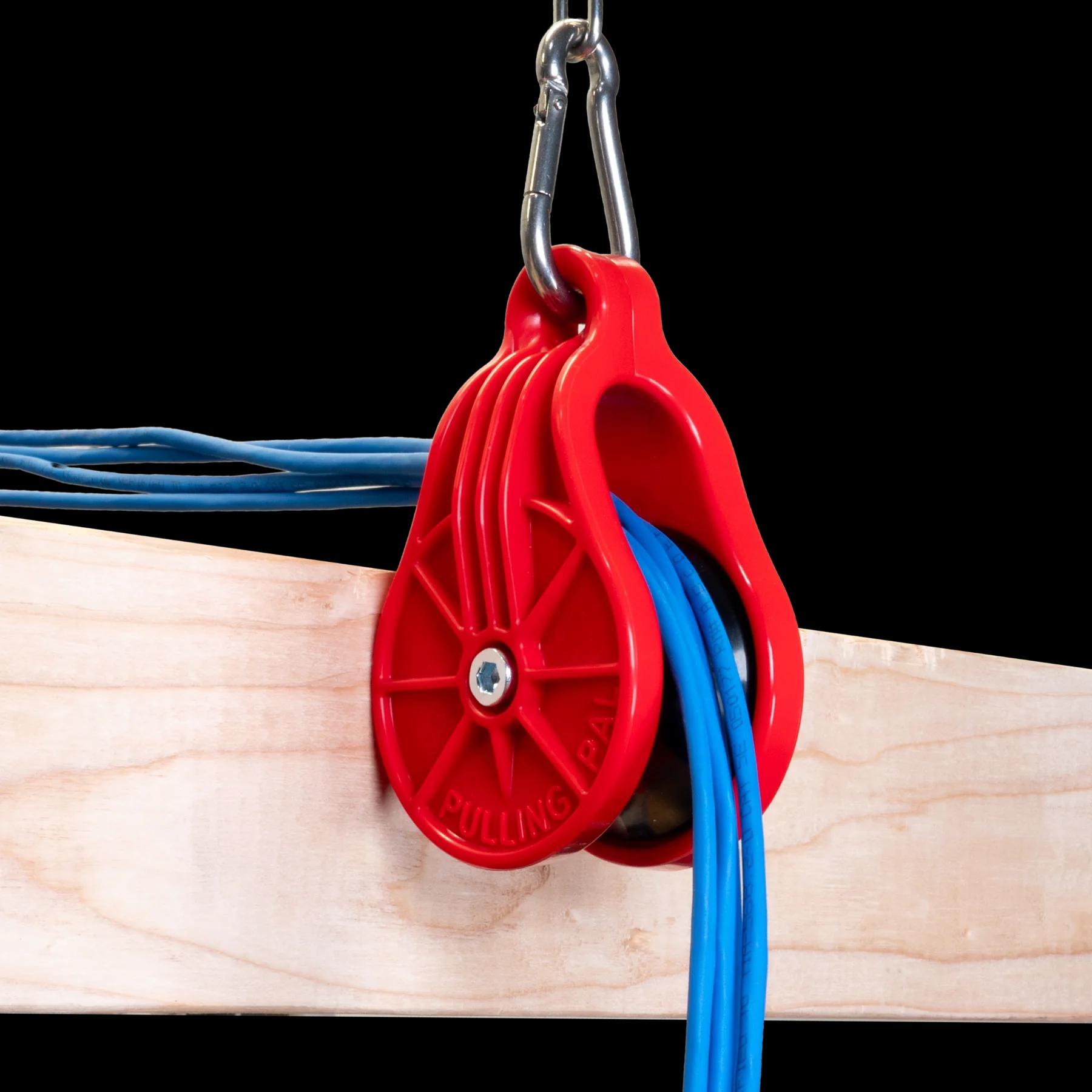
Housing against framing. Sheave free to turn.
Exposed wheels can rub against nearby framing and add drag. V2’s side housings protect the sheave, so it keeps rotating even when the housing touches the structure.
Patent Pending · Assembled in Colorado, USA
Find your V2 kitDesigned & Tested for 300 LB Loads.
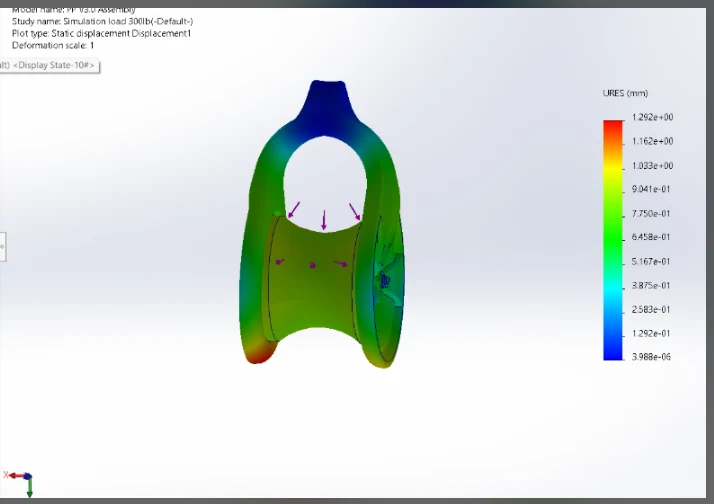
Finite element analysis was part of developing the V2 housing. Shown here is the authentic, unedited SolidWorks static-displacement plot of the housing.
The colors show simulated displacement in millimeters — not stress, strain or load capacity. Simulation supports the design; it does not replace physical testing.